Der Film behandelt im ersten Teil Einzelheiten der Landhausarchitektur der von Mies van der Rohe (1886-1969) 1930 in Krefeld gebauten Privathäuser, die heute Museum sind. Der Kunsthistoriker Prof. Dr. Wolf Tegethoff erklärt die Architektur und spricht über Details dieses Ensembles aus zwei sehr ähnlichen, geschwisterlichen Gebäuden.
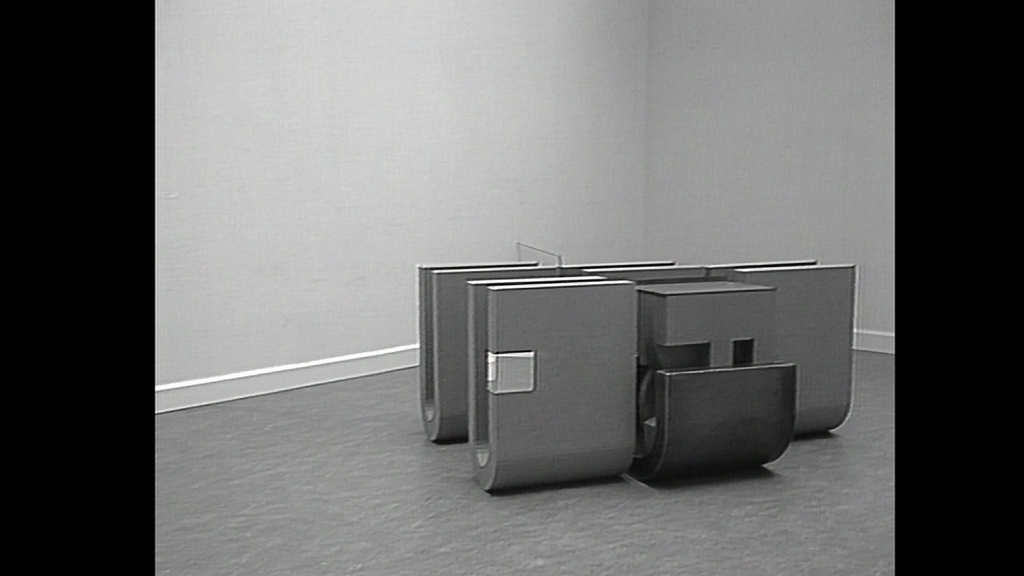
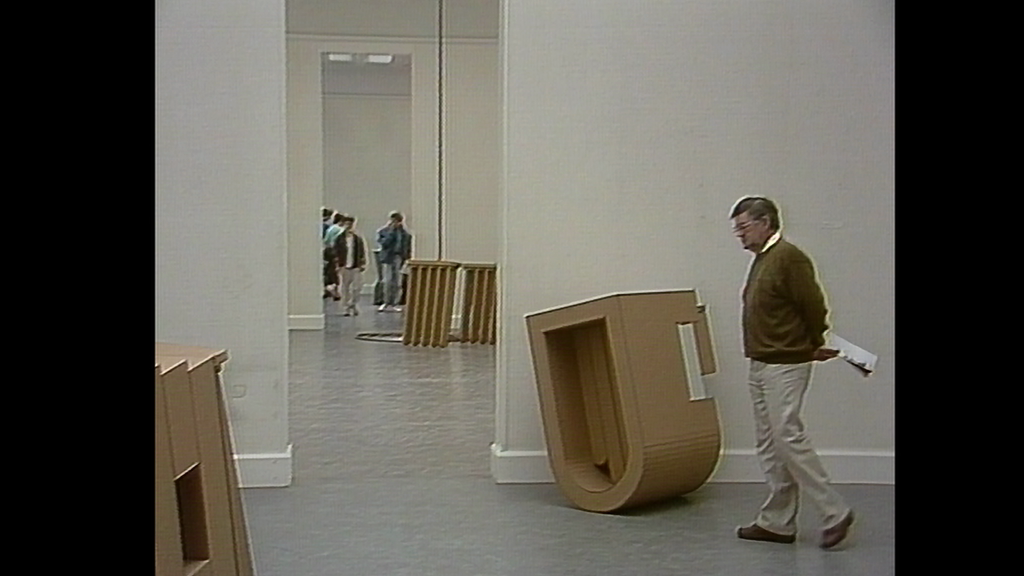
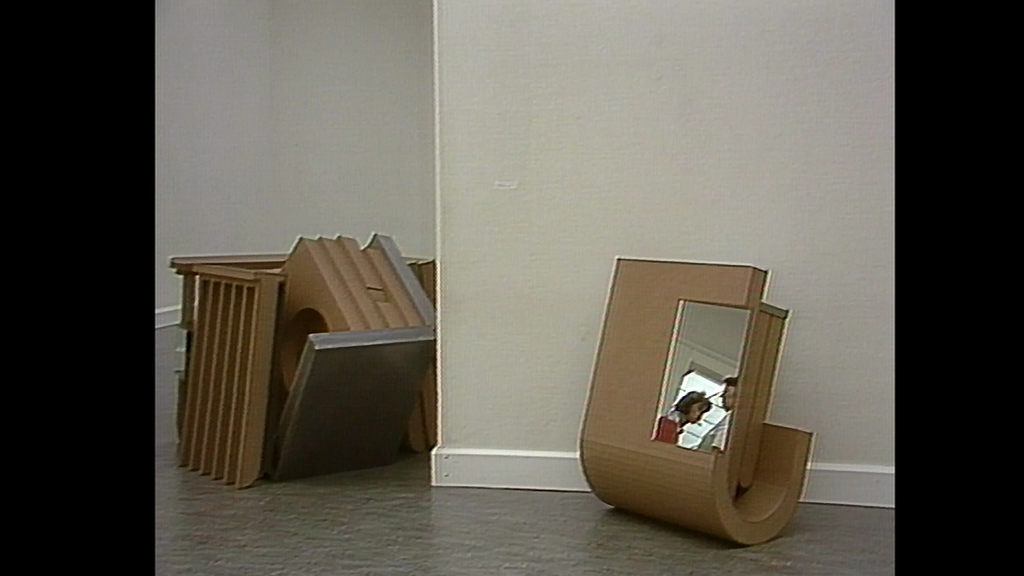
Im zweiten Teil des Filmes werden Skulpturen des englischen Bildhauers Richard Deacon (*1949) vorgestellt, die zum Teil speziell für die Ausstellung in Krefeld hergestellt wurden. Richard Deacon und Dr. Julian Heynen, Kurator der Ausstellung, sprechen über die konzeptuellen Unterschiede der Ausstellung für die beiden Häuser und erörtern Aspekte einzelner Skulpturen.
Animationsfilm (1994, 15 Min) von Martin Kreyssig zu Werken des Künstlers Thomas Schütte, die 1994 in zwei Ausstellungen mit dem Titel »Figur« in der Hamburger Kunsthalle (5. Mai 05 – 26. Juni) und im Württembergischer Kunstverein Stuttgart (3. September – 16. Oktober) präsentiert wurden.
In der Tradition, die Perfektion des Dilettantischen – im Gegensatz zur Ingenieurskunst – voranzutreiben, führt der Kurzfilm durch das figürliche Werk von Thomas Schütte aus den 1980 bis 1990er Jahre. Der Film ist in Einzelbildschaltung im Format 16mm gedreht und unterlegt die Bildsequenzen mit Geräuschen aus Datenbanken, die seinerzeit z.B. in der Vertonung von Spielfilmen eingesetzt wurden.
Filmessay der Ausstellung „LE DIAPHANE – Une Réflexion, une Collection, une Exposition, un Lieu“ in französischer Sprache (60 min, 1993) von Martin Kreyssig, kuratiert von Denys Zacharopoulos, mit Werken von Giovanni Battista Piranesi und zeitgenössischen Künstlern in Tourcoing / Pas de Calais 1990 – 91. Sprecher: Thomas Schultz.
Künstlerinnen und Künstler: Carla Accardi, Pierre Dunoyer, Arnulf Rainer, Jean Pierre Bertrand, Jannis Counellis, Reinhard Mucha, Per Kirkeby, James Coleman, Thomas Ruff, Thomas Schütte, Niele Toroni, Dan Flavin, Eugéne Leroy, Gilberto Zorio, Pier Paolo Calzolari, Michelangelo Pistoletto, Daniel Walravens, Matt Mullican, Jan Vercruysse, Harald Klingelhöller, Herbert Brandl, Jean-Marc Bustamante, Marisa Merz, Mario Merz, Brice Marden, Isa Genzgen, Renè Daniels, Jeff Wall, James Welling, Ernst Caramelle, Helmut Dorner, Mariella Simoni, Richard Long, Gerhard Richter, Pat Steir, André Caderé, Blinky Palermo, Sol Lewitt, Silvie et Chérif Defraoui, Thomas Struth, Dan Graham, Günther Förg, Lawrence Weiner et al.
Der Videofilm mit dem Titel »Le soleil a la taiIlle d’un pied humain / Die Sonne hat die Größe eines menschlichen Fußes« folgt der von Denys Zacharopoulos konzipierten Ausstellung im Museum und der Akademie der nordfranzösischen Stadt Tourcoing. Der umfangreichen Präsentation zeitgenössischer Kunst stehen die Arbeiten des Barockarchitekten und Vedutenzeichners Giovanni Battista Piranesi (1720-78) gegenüber. Der Film geht ausführlich auf die Arbeit dieses großartigen „Archäologen der Architektur“ ein, beschreibt Leben und Technik, und verbindet sein Oeuvre mit den Darstellungen moderner Skulptur, Malerei und Zeichnung.
Texte von Heraklit, Victor Hugo, Paul Valéry und Paul Virilio ergänzen den Film um die Problematik der Repräsentation moderner Kunst im Museum. Das Durchscheinende – Diaphane – der Ausstellung bildet die Struktur des Films.
Der Videofilm dokumentiert eine Einzelausstellung des Düsseldorfer Bildhauers Harald Klingelhöller (*1954) im Van Abbemuseum Eindhoven 1990. Der Arbeitsweise des Künstlers folgend, wurde aus den Titeln der Skulpturen, der Beugung des Tätigkeitswortes „fallen“ und der Deklination der Worte „Anatomie“ und „Angst“ ein akustisches Gewebe erstellt, an das die dokumentarischen Aufnahmen der Ausstellung geknüpft sind. Beim Hören entsteht auf diese Weise ein Sprachraum, dessen assoziative Bildkraft neben den Skulpturen existiert, ohne sie zu erklären.
Frankfurter Judaskuss, 2003, Caroline von Grone, Videofilm / Länge: 15:00 min / Produktion: Caroline von Grone
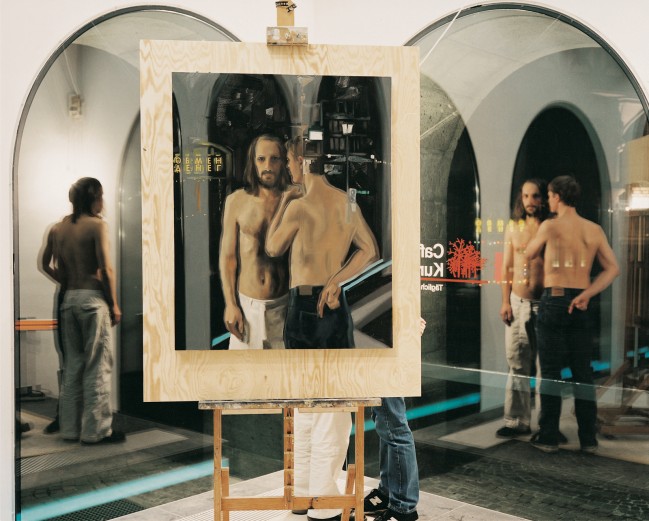
Die Aktion Frankfurter Judaskuss findet zur Eröffnung der Ausstellung deutschemalereizweitausenddrei im Frankfurter Kunstverein im Jahr 2003 statt. Zwei männliche Halbakte stehen im Schaufenster des Kunstvereins Modell. Ihre Spiegelung im nächtlichen Fenster wird gemalt. Von außen ist fünf Tage vor der Eröffnung nur die Modellsituation sichtbar, nicht was gemalt wird, nach der Eröffnung erschließt sich von innen das Bildmotiv. Anschließend werden die entstandenen Bilder und der parallel in Zusammenarbeit mit Martin Kreyssig produzierte Film über die Aktion in der Ausstellung gezeigt.
The action Frankfurter Judaskuss (The kiss of Judas in Frankfurt) was performed to mark the opening of the exhibition deutschemalereizweitausenddrei at Frankfurter Kunstverein, Frankfurt am Main, 2003. Two male semi-nudes provided the models in the art association’s display window. Their reflection in the nocturnal window was painted. For five days before the opening, only the painter with the models could be seen from outside, not the painting; the subject of the painting only became apparent inside after the opening. Afterwards, the pictures painted were shown in the exhibition along with a film about the action filmed by Martin Kreyssig.
Produced with Martin Kreyssig, shown during the exhibition deutschemalereizweitausenddrei at Frankfurter Kunstverein, Frankfurt/Main, 2003